SFS TURKS & CAICOS: MARINE RESOURCE STUDIES
(SEMESTER)
PROGRAM DETAILS
Terms | Fall, Spring
Credits | 16 semester-hour credits
Prerequisites | One college-level course in biology, ecology, or environmental studies/sciences with a grade of C or higher (or AP Biology or AP Environmental Science with a score of 4 or higher, or an IB Higher Level exam with a score of 5 or higher) | 2.8 GPA | 18 years of age by program start
Application Deadline | Fall: June 1. Spring: November 1. Rolling admissions: apply early, programs fill fast.
Financial Aid | All students are encouraged to apply for SFS financial aid, which includes need-based scholarships and SFS loans.
OVERVIEW
The water is so clear you see sixty feet to the bottom. Reefs rise like underwater mountain ranges, and reef sharks weave through channels where the shelf drops into the Columbus Passage, a deep ocean trench separating the Turks from the Caicos Islands. South Caicos is a 13-square-mile island with 1,500 residents and one of the Western Hemisphere’s longest barrier reef systems. Everything here depends on the sea.
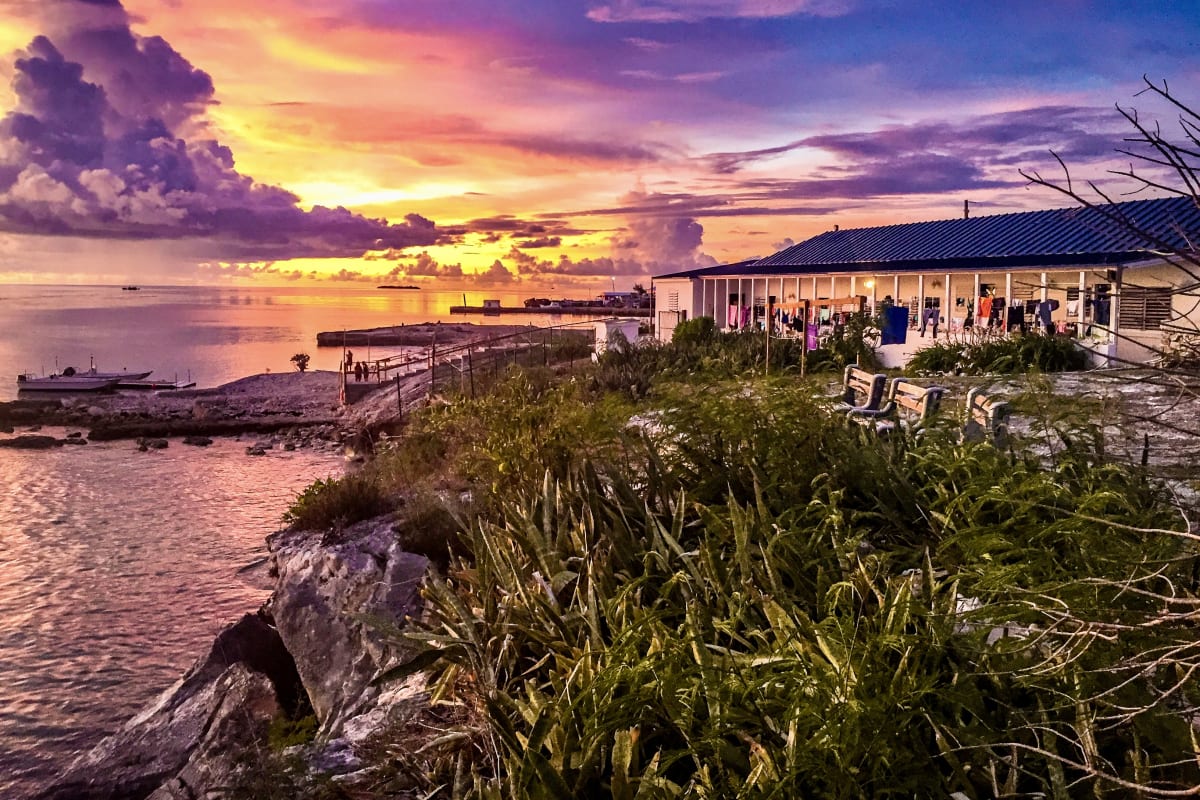
Students can work toward SCUBA certification through the first half of the semester while surveying transects, assessing fish diversity, and documenting invertebrate populations. Diving is never required: snorkelers run the same surveys without SCUBA. Between field days, students work alongside local fishers collecting conch catch data and survey conch, lionfish, and seagrass inside and outside the island’s marine protected areas. Evenings bring gear drying on the line beside the day’s data sheets.
PROGRAM HIGHLIGHTS
→Work alongside local fishers collecting conch catch data, and conduct eight-hour underwater visual assessments of queen conch size and age structure inside versus outside marine protected areas, then analyze data and create scientific posters.
→Snorkel and dive to document invasive lionfish behavior, habitat associations, and abundance, then dissect specimens to examine stomach contents and biological data.
→Conduct in-water assessments of coral cover, fish species diversity, and reef health using transects and biodiversity indices, and four-hour seagrass assessments measuring species distribution and macro-invertebrate abundance, with data analysis in R Studio.
→Travel across the Turks and Caicos Islands to North Caicos, Middle Caicos, and Providenciales, discovering the history of the islands and how tourism and development are reshaping them.
→Represent tourism, fishermen, NGO, and management perspectives in mock policy debates, then evaluate real MPA effectiveness through field data.
→Join a faculty-led Directed Research project defined with local stakeholders, then present the research to the Department of Environment and Coastal Resources and the island community at the end of the semester.
LOCATION
Students live and study at the SFS Center for Marine Resource Studies. The center sits on the waterfront at the southern edge of South Caicos, in one of the Atlantic’s most remote marine environments, where reef, mangroves, and seagrass meadows all converge within a mile of the classroom. South Caicos is the fishing capital of the Turks and Caicos Islands, where spiny lobster and queen conch still sustain the economy the way they have for generations.
Students live in shared housing, eat together in the campus dining hall, and walk to the dock for morning snorkels. The island has no stoplights and about 1,500 residents, an intimate setting where every face is familiar and every reef is within boat range. Evenings and Sundays offer time for rest, town visits, or informal center activities, and during the one-week mid-semester break the center closes and students travel independently.
RESEARCH THEMES
- Coastal Ecosystem Services
- Coral and Fish Diversity
- Lobster Casitas
- Reef Soundscapes
CORE SKILLS
- Marine Species ID
- Fisheries Data Collection
- Ecological Data Analysis
- Seagrass Ecosystem Surveys
- Water Quality Testing
- SCUBA Research Diving
- Terrestrial and Marine Mapping
- Stakeholder Policy Debates
LEARN MORE
REQUEST INFORMATION
APPLY NOW
CONNECT WITH SFS
Visit our website: fieldstudies.org
Email: admissions@fieldstudies.org
Follow us on Instagram
Learn more on our Vimeo
